

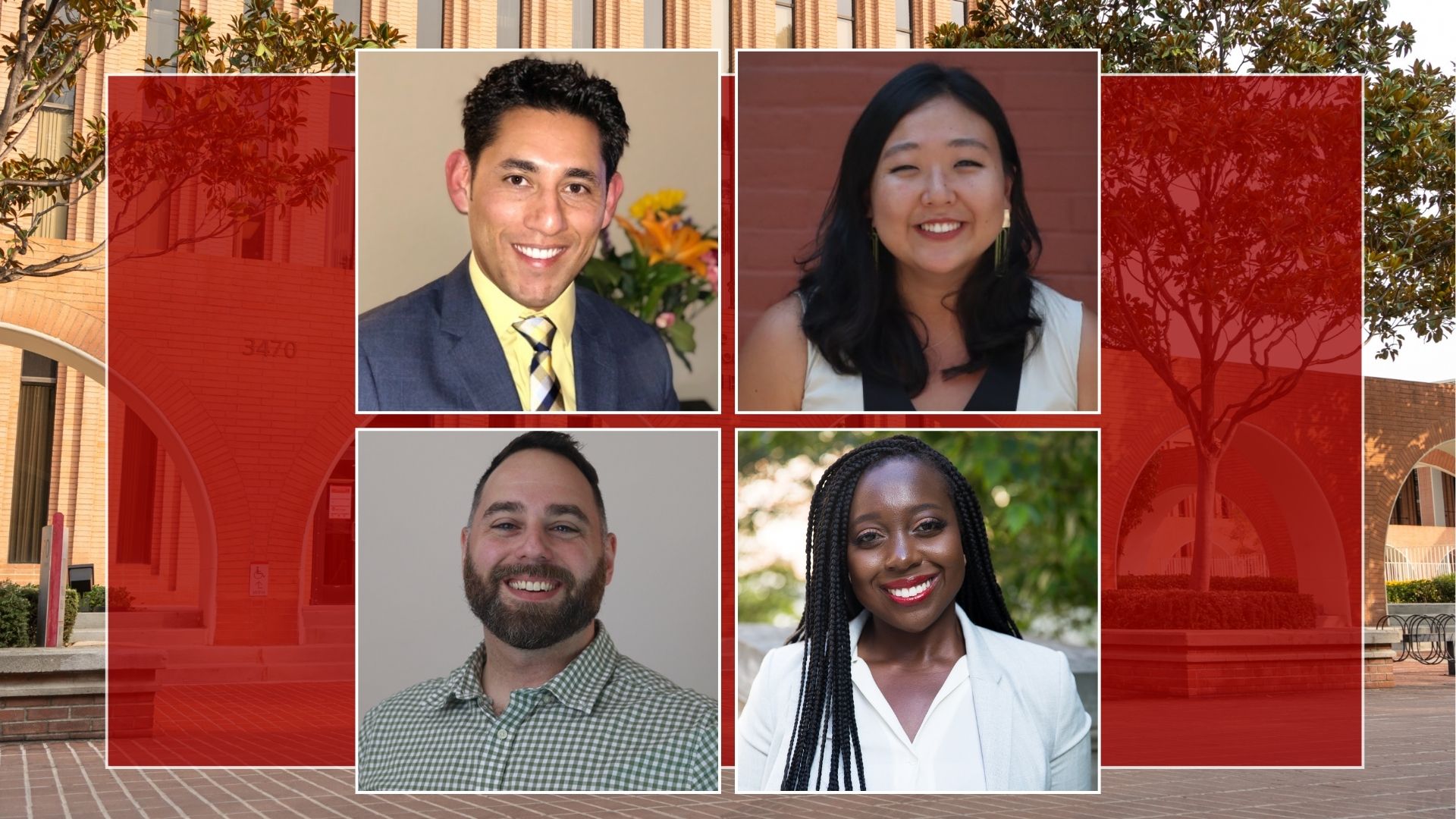
By Raúl Gamez, Angie Kim, Ricky Urgo, Amber Williams
University of Michigan
As research assistants who joined the Promoting At-promise Student Success (PASS) team at various points over the years, our roles have each looked a little different. We conducted student interviews, on-site observations, performed data analysis, and wrote evaluation reports. A few even traveled to the University of Southern California for a PASS summer retreat. However, the beauty of a longitudinal, multi-institution project like PASS is that it created opportunities for all of us to contribute meaningfully, whenever we arrived. In celebration of its 10+ years, we reflected through a dialogue on key takeaways, lessons that we have carried into our own research endeavors.
Learning about Research-Practice Partnerships
Raúl: Doing research site visits showed me the complexity of multi-campus collaborations and its importance. Seeing university practitioners translate our work into their programming in real time made all the meetings and the process worth it.
Ricky: The project taught me to be flexible with uncertainty around how a research project finishes, pivots, or takes a different shape. I also gained perspectives from colleagues about how community contexts inform how they think about student success in different ways.
Experiencing Mentorship
Amber: Ralitsa Todorova , a senior postdoctoral scholar, provided the bones for our data analysis and guided me through the data coding process when it felt unfamiliar. At a research retreat, Ralitsa made laminated sheets of our study constructs that I’ve kept in my office ever since. It’s a critical tool for understanding student success and persistence for at-promise students. Mariama, a former postdoctoral scholar, also brought in constructs pertaining to at-promise student experiences that were critical to our analysis, pushing the team to think more critically. Working with postdocs as essential contributors to our team gave us a real-time model of what it looks like to be a postdoc in a research team whose members were housed at multiple universities.
Being Bold with Our Voices
Raúl: When developing interview protocols for our study, we sometimes wondered if we were asking the right questions about various at-promise (e.g., low-income, first-gen) student groups. The project reinforced the importance of this critical work. Those conversations reinforced the questions I was asking in my own research in and outside of the project.
Angie: Even when certain changes to protocols weren’t fully possible, there was still an invitation to contribute. In the beginning, I didn't, because it was intimidating. Seeing various team members like Mariama, Liane, and Rosie push us to think more critical challenged me to see that we should be having ongoing dialogues about how we engage in our work. Those meetings emphasized my “why” of being in higher ed and sharpened my criticality.
Ricky: As the most junior person here, I would’ve been more silent without the confidence I have from this research community. Our conversations had an impact on me - when I feel there needs to be more conversation, I feel more confident about bringing something to the table, and I think that is because I feel like I have a team that will also ask those questions.
Amber: The project provided a space to practice risk-taking. There were moments where I pushed myself to speak up on things that felt important, even when I wasn’t sure how the group would receive it. Working through the anxiety of offering a critical perspective or a different way of approaching our work was valuable. Also, watching the scholars in the advisory board meetings share their insights or critiques respectfully and mindfully felt like an invitation, which encouraged me to keep speaking up.
Conducting Student-Centered Research
Angie: This project was the first time I ever conducted interviews. I fell in love with research after that first one, especially knowing our conversations with students translated to practice. The longitudinal nature of the project taught me to be a good steward of their narratives. A question a research team member, Rosie, asked once stayed with me for years: If you do relational work with students, faculty, or staff, how do we talk with them in ways that are more evocative than extractive?
Amber: Rosie also taught us to stay curious, let participants lead, and ask questions that surface meaning without inserting our own predispositions. Following students along their own journey has been really fun. We get to be excited about the things that they're excited about.
Closing
From examining issues we cared about in papers we are writing, like immigrant and refugee student well-being (forthcoming) and how faculty engage in ecological validation (forthcoming), our experiences illuminated the joy of seeing the practical implications of our research and expanded our skills and capacity as rising scholars.