


Description
The Broadening Access through Law-Attentive Design (BALAD) project is a professional learning series and community of practice designed to provide actionable guidance and resources that higher education leaders can utilize to broaden access and opportunity for students on college and university campuses.
About
In this rapidly evolving legal and political environment, the Broadening Access through Law-Attentive Design (BALAD) project is designed to provide actionable guidance, tools, and a supportive learning community for higher education leaders (e.g., chief enrollment officers, deans, provosts, academic program leaders) and university counsels.
BALAD is a collaborative project led by experts from the University of Southern California, the American Association for the Advancement of Science (AAAS), and EducationCounsel. By combining legal expertise, research-based practices, and innovative policy approaches, this project will empower institutions to develop legally compliant and equal-opportunity-focused strategies tailored to their unique contexts.
The project team will develop a suite of resources and organizational learning opportunities to meet institutions’ need for expert guidance in the development of law-attentive policies and practices in graduate and undergraduate education, particularly in the STEM fields.
Meet Our Webinar Panel Experts
For all five webinars, representatives from our partners EducationCounsel and AAAS are on hand to share their knowledge about Broadening Access through Law-attentive Design:

Steve Desir
USC Pullias Center

Art Coleman
EducationCounsel
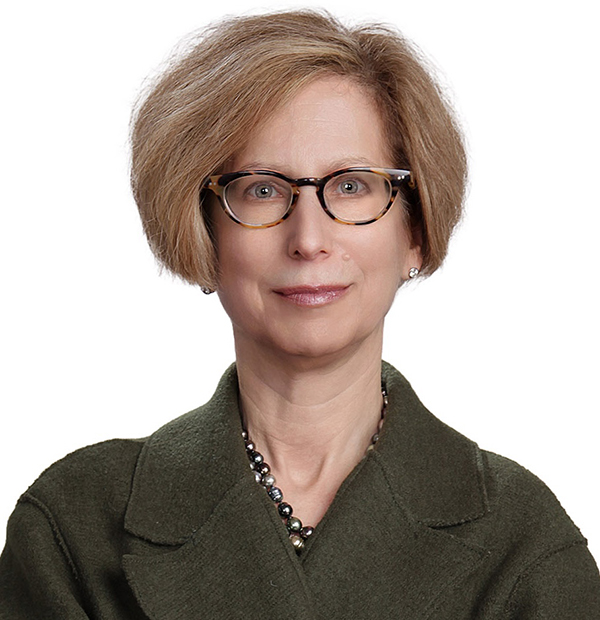
Jamie Lewis Keith
EducationCounsel

Travis York
AAAS
BALAD Webinar Series:
A Five-part Professional Learning Series for Higher Education Leaders and University Counsel
Join experts in law, research, and policy for a five-session recorded webinar series focused on designing law-attentive, mission-aligned approaches to broaden access and opportunity for students on college and university campuses.
Universities everywhere are designing and implementing institutional policy and practice in a changing legal and policy landscape, while striving to uphold core mission-related access and opportunity goals. Grounded in legal expertise and research-informed practice, this webinar series is designed to support campus leaders, faculty, and staff as they navigate the evolving federal and state policy landscape. Each session centers on practical strategies that are attentive to current law (including state law trends), as well as organizational mission and context—helping leaders move forward with greater clarity, confidence and purpose.
Watch the Webinar Series
Each webinar includes a presentation, followed by a live Q&A and a facilitated discussion with the presenters. The emphasis throughout the series is on translating insight into action with practical recommendations: what campuses can do, how they can do it, and how to proceed thoughtfully in today’s higher education landscape.
BALAD Webinar #1: "Leading from Mission to Action with Clarity: The Role of Institutional Policy"
In this foundational webinar, panelists Art Coleman and Jamie Lewis Keith of EducationCounsel and moderator Steve Desir addressed the necessary alignment between mission and practice in the current legal and policy environment and the imperative of written clarity in policy development. Focusing on alignment among counsel, staff, and faculty, as well as on legal defensibility, speakers shared outlines and templates that frame key issues that institutions should consider in their policy and practice design and articulation.
BALAD Webinar #2: "Managing Risk, Responsibility and Mission: Law-Attentive Decision Making in Practice"
This second webinar in the series explored how leaders can make thoughtful, mission-aligned decisions about how their institutions operate and move forward, amidst heightened scrutiny and legal uncertainty. Panelists shared practical approaches for anchoring decisions in mission while balancing compliance, institutional aims and forward movement with clarity, purpose and law-attentive action. Participants gained practical guidance on making thoughtful, law-attentive decisions that balance compliance, mission and institutional responsibility.
BALAD Webinar #3: "Communicating with Purpose: Explaining the What, Why and How of Institutional Action"
With a focus on key elements of institutional narrative, this third BALAD webinar in our series examined how institutions can communicate about their work clearly, confidently and strategically in moments of heightened scrutiny. Participants considered how messaging choices shape understanding, trust and legitimacy among internal and external audiences — with a focus on key concepts, terms, and definitions. Hosted and moderated by legal experts and representatives from EducationCounsel and the Pullias Center.
BALAD Webinar #4: "Designing for Durability: Developing Sutainable Policy in a Shifting Landscape"
This fourth BALAD webinar in our series focused on designing policies and initiatives that are built to last amid changing legal, political and organizational conditions. Grounded in fundamental principles of federal nondiscrimination law in the wake of the Supreme Court’s 2023 SFFA v. Harvard decision, participants explored how law-attentive design principles can support implementation, adaptation and long-term institutional impact. This session focused on the mix of barrier removal and neutral strategies that can support success and was moderated by Rossier Assistant Research Professor Steve Desir.
BALAD Webinar #5: "Change as Process: Navigating Politics, Timing and Institutional Context"
Leading organizational change today requires more than strong policy ideas — it requires careful attention to process, people and power. This session examined how leaders can navigate institutional politics and manage change in ways that sustain momentum rather than stall it. Of particular attention was aligning one’s policy, politics and institutional context.
Project Team
Steve Desir
Principal Investigator,
Assistant Research Professor, USC
Jerry Lucido
Co-PI,
Professor Emeritus, USC
Emily Chung
Managing Director,
USC Pullias Center for Higher Education
Partners
EducationCounsel is a mission-driven education consulting firm that works with leading nonprofit organizations, foundations, and policymakers at all levels to help significantly improve education opportunity and outcomes.
The American Association for the Advancement of Science (AAAS) fulfills its mission to advance science and serve society through initiatives in science policy, diplomacy, education, career support, public engagement with science, and more.
Funder

The Alfred P. Sloan Foundation is a not-for-profit, mission-driven grant-making institution dedicated to improving the welfare of all through the advancement of scientific knowledge. Established in 1934 by Alfred Pritchard Sloan Jr., then-President and Chief Executive Officer of the General Motors Corporation, the Foundation makes grants in four broad areas: direct support of research in science, technology, engineering, mathematics, and economics; initiatives to increase the quality and diversity of scientific institutions and the science workforce; projects to develop or leverage technology to empower research; and efforts to enhance and deepen public engagement with science and scientists.