

By Zoë Corwin
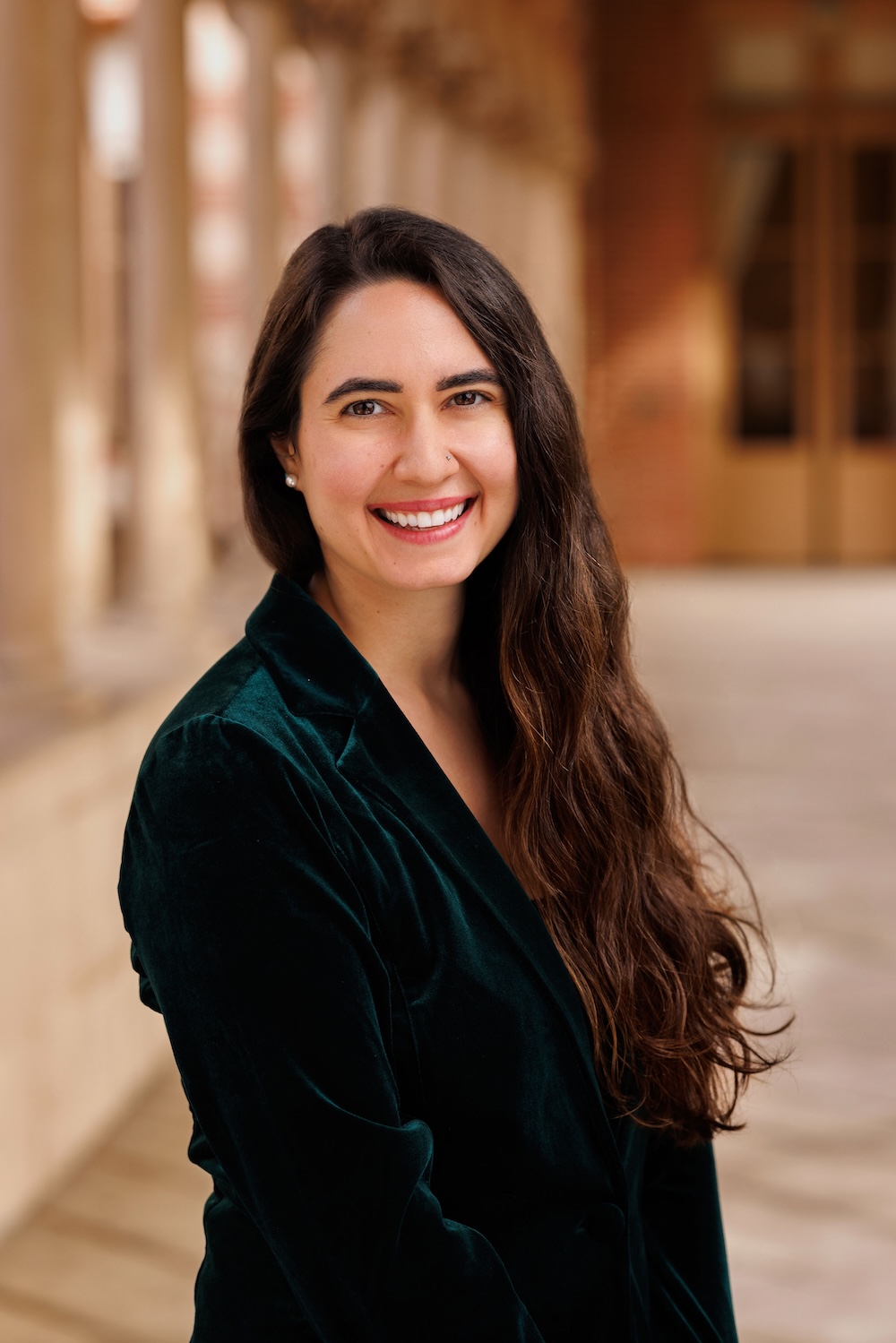
Elif Yücel, a Pullias alumna and member of the Learning and Evaluation team at ECMC Foundation, has been named the 2026 recipient of the Association for the Study of Higher Education’s Dissertation of the Year Award. She was also honored in 2025 with the USC Rossier’s Dissertation of the Year Award.
Her dissertation, What Happens When You're Free: Navigating the Nexus of Higher Education and Criminal Legal Reentry, was advised by the late Professor Tatiana Melguizo and chaired by Royel M. Johnson. The project examines how students who have been impacted by the juvenile punishment system navigate college, community, and reentry. Across her research and professional work, Elif centers the perspectives of system-impacted students and challenges the siloed nature of reentry support.
At the heart of Elif’s work is a recognition that community college reentry programs can offer far more than academic guidance or basic support services. They can also become, as she describes them, “social hubs for community,” connecting students with others who have endured similar experiences and can relate to what they are going through.
Elif describes these programs as “anti-carceral counterspaces” — stigma-free environments where system-impacted students can rebuild trusting relationships with peers, educational institutions, and broader systems of support. That sense of trust is especially important, she argues, because many incarcerated and formerly incarcerated students have experienced systemic harm in educational settings long before college.
Her research also complicates the idea that education alone can solve the harms of mass incarceration. While expanding access to higher education matters, Elif cautions against treating incarcerated and formerly incarcerated students as “passive beneficiaries for programmatic altruism.” Support programs, she argues, must examine whether they are creating new possibilities or unintentionally reproducing inequity, stigma, and harm.
For Elif, meaningful reentry support requires work across institutions and systems. “Just because you’re released from prison doesn’t mean you are free,” she explains, pointing to the many bureaucratic, procedural, and social barriers that continue to shape people’s lives after release. Community college reentry programs can help mediate those barriers by building relationships with district attorney offices, probation and parole offices, and community-based organizations.
That is why, for Elif, “this work cannot be siloed.” Higher education is one lever for change, but students’ lives are shaped by many overlapping systems. Reentry support requires educational institutions to work in partnership with the agencies, organizations, and communities that influence students’ daily realities.
That broader systems perspective continues to shape Elif’s work at ECMC Foundation, where she analyzes the impact of grantmaking, supports strategic decision-making, and facilitates collective learning across the foundation and within philanthropy. Her work draws on the methodological tools and deep knowledge of higher education she cultivated during her time at the Pullias Center.
Over the past year, Elif also participated as a fellow at the UC National Center for Free Speech and Civic Engagement, where she explored how formerly incarcerated college students experience campus free speech climates.
Elif’s award-winning research reminds us that reentry is not simply about access to college. It is about whether institutions are willing to build the relationships, policies, and conditions that allow system-impacted students to experience education as a site of possibility rather than another encounter with harm.