

By Zoë Corwin
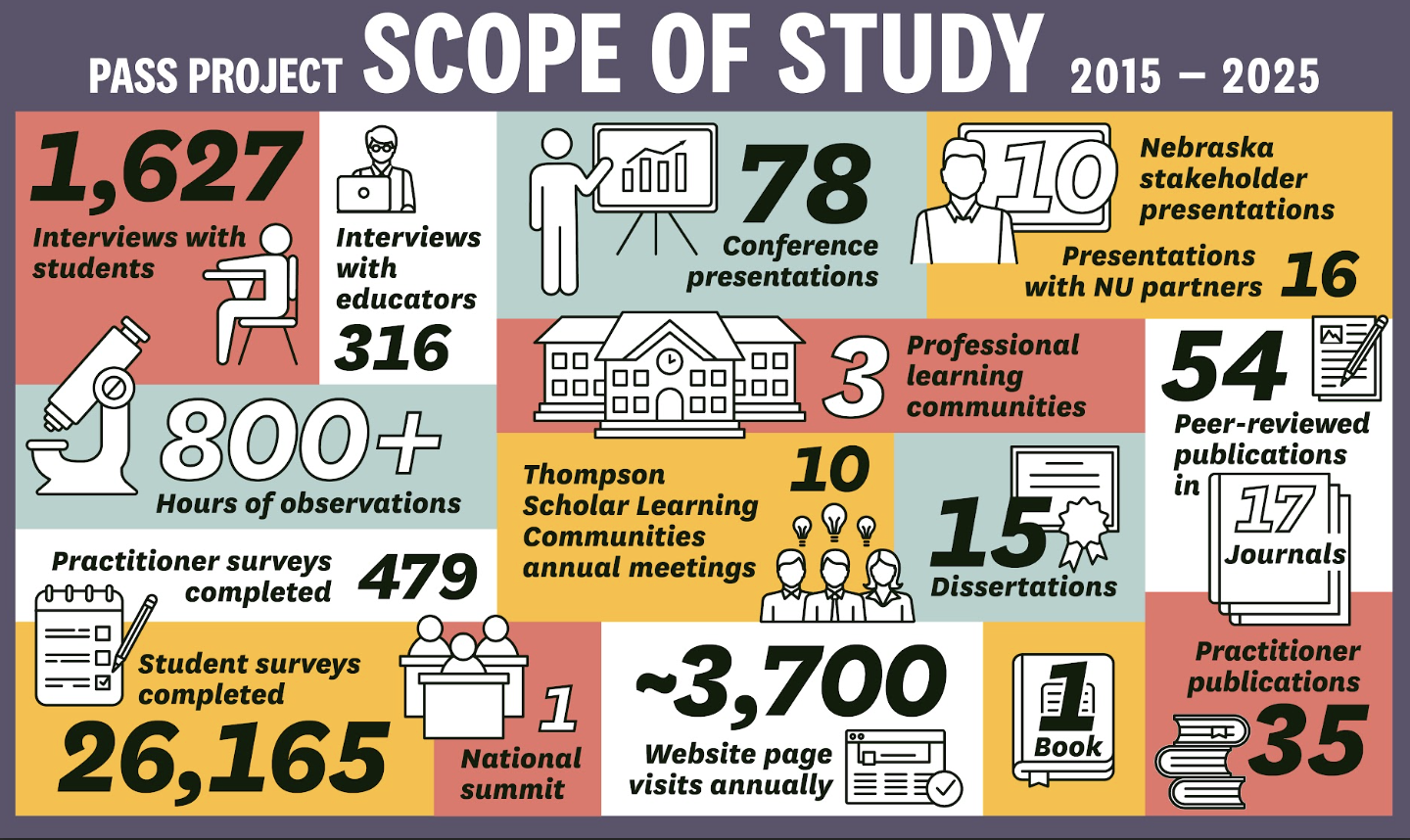
The Promoting At-promise Student Success project is among the largest postsecondary success studies in the country. The strength of the project is anchored in intentional and longitudinal collaboration among researchers from multiple institutions, varied stakeholders at the University of Nebraska, and our funder. This year, we’re focusing on disseminating findings from more than a decade of data collection and analysis and deeply appreciate funding support for creating materials that resonate with diverse audiences. So often, research deliverables center around conference presentations and peer-reviewed journal articles. While those types of dissemination activities remain integral to this project, we are profoundly grateful to have the support to create additional deliverables that are accessible to practitioners. We look forward to continuing to develop new materials this year deriving from the project’s decade-long quantitative and qualitative datasets — especially when those materials are developed in partnership with our practitioner partners.
A few recent dissemination highlights include:
- We’ve revised sections of our website to provide a slimmer synopsis of the project and related key findings and we continue to expand our practitioner-oriented modules, among them new modules on peer mentoring, career development, well being, and using vignettes about student experiences as a mechanism for practitioners to reflect on how to improve practice.
- We have three articles in the latest issue of the Journal for Student Affairs:
- Latin* college students’ major and career self-efficacy: A familial and community cultural wealth analysis;
- Using subjective and objective social class measures in research, assessment, and practice; and
- Individual and collective learning through professional learning communities: Institutionalizing student success.
- In the last Pullias Center newsletter, Joseph Kitchen highlighted our research on peer mentoring. Teachers College Record (TCR) recently posted an episode of The Voice where I share reflections on our TCR article and implications for practice: Promoting Low-Income College Student Success through Peer Mentoring: A Mixed Methods Examination.
- This semester we look forward to presenting research findings at a wide range of practitioner-oriented conferences, several in partnership with our University of Nebraska colleagues:
- FYE (re: metacognition, career pathways, leveraging reflection in first-year writing courses),
- NASPA (re: research-practice partnerships, and the role of off-campus support),
- ACPA (re: campus engagement among low-income first-year students, and student affairs practitioners fostering change),
- AAC&U (re: professional learning communities and ecosystems for career success), and
- AERA (re: the impact of research-practice partnerships on campus culture).
- And finally, while not new, I couldn’t post a reflection about being grateful for dissemination support without calling attention to the animated videos we develop to succinctly share research findings with implications for practice (see this one for an overview of the PASS project) and the practice briefs we produce as partner pieces to our peer-reviewed articles. These types of deliverables are key in making sure our research is accessible — and they entail resources (time and funding for graphics and animation) to create.
We spend considerable time as a research team conceptualizing how to share our findings in ways that might resonate with our partners at the University of Nebraska as well as the broader higher education audience — and then writing up and designing the deliverables. As the Principal Investigator on the project, I am deeply grateful to our funder for supporting this work, to our practitioner partners for trusting in the process — and to our incredible research team comprised of faculty, undergraduate and graduate students, and staff for putting in the time, brainpower and heart to share what we’re learning through high quality dissemination.